Sovereignty Rests with the People

Project Arbroath is a civic initiative dedicated to explaining popular sovereignty in Scotland. We have grounded ourselves in the principle that Scotland's future should be decided by Scotland's people—not by Westminster, not by permission, but by right.

Holyrood Election 2026

Understanding how your vote works is the first step toward using it effectively. The second vote—the regional list—is crucial to parliamentary balance.

The Principle of Sovereignty

The claim that Scotland requires permission to decide its political future is not just constitutionally incorrect—it is a fundamental misunderstanding of where power rests. Sovereignty is not a gift from Westminster. It is right held by the people.

⚖️

Non-Partisan

We are advocates for any party. We are interested only in sovereignty and democratic self-governance.

📖

Legally Grounded

Our positions are based on constitutional law and accepted legal principles, not conjecture or wishful thinking.

🛡️

Civic Education

We are dedicated to the idea that power cannot be exercised without understanding.

Focus: The Holyrood Voting System

The Scottish Parliament elections use a system designed to balance parliamentary representation. But many voters don't understand how it works—particularly the regional (second) vote and the D'Hondt formula that determines how seats are allocated.

  • Vote 1 (Constituency): Elects a single MSP using a simple First Past the Post system. Put your preferred candidate first.
  • Vote 2 (Regional List): Designed to correct disproportionate outcomes from the constituency vote using the D'Hondt system.
  • How D'Hondt Works: Parties that win many constituency seats are penalised in the regional allocation. Their votes are divided by (seats won + 1).

Understanding this system is not optional if you want to use your vote effectively. The second vote is not a "backup" for your first choice—it's a separate mechanism with its own logic.

How the 'Correction' Works

Launch Seat Calculator
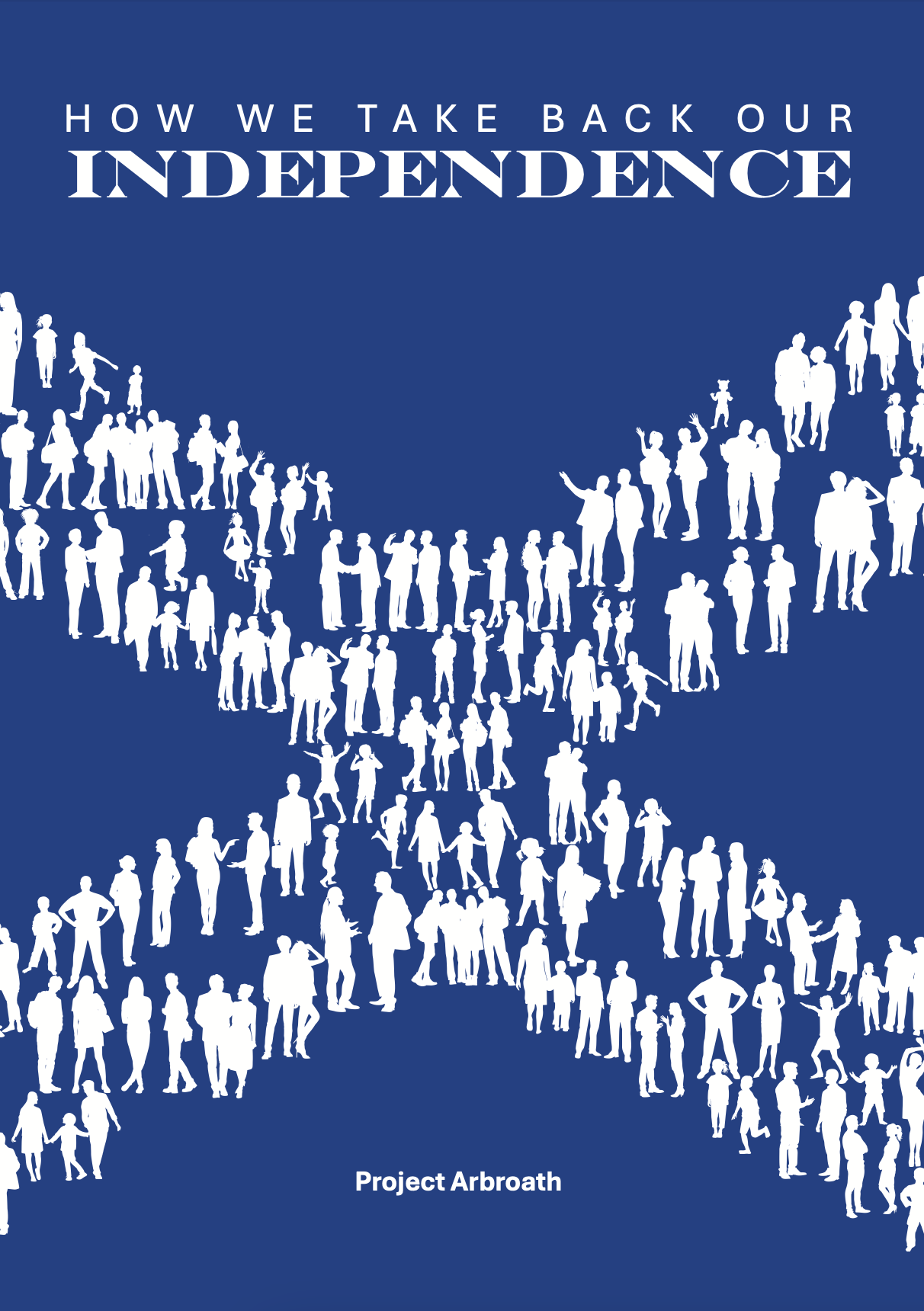
Project Arbroath Booklet Cover

The Project Arbroath Booklet

This isn't a wish list or a roadmap for the next election. This is the argument—grounded in claim of right and rooted in Scotland's constitutional continuity—for why sovereignty belongs to you.

Grounded in claim of right and rooted in Scotland's constitutional continuity, this booklet makes the case that sovereignty has never left Scotland's people—and therefore, permission is not required for self-determination.

Available in multiple formats, from single copies to bulk distribution boxes for organised outreach.

What is Sovereignty?

Sovereignty is the ultimate source of political authority in a nation. It is the power to make fundamental decisions about how a country is governed and by whom.

In Scotland, sovereignty does not rest with Westminster, Holyrood, or the Crown. It rests with the people of Scotland. This is not political rhetoric—it is a constitutionally grounded principle with deep historical roots.

The Declaration of Arbroath (1320)

The Declaration of Arbroath established a principle that has defined Scottish constitutional thought for over 700 years: that kings and leaders serve at the will of the people, and can be removed if they fail to uphold that responsibility.

This was a revolutionary idea in 1320—and it remains the foundation of Scotland's claim to popular sovereignty today.

Claims of Right

Throughout history, Scotland has repeatedly asserted popular sovereignty through formal Claims of Right:

  • 1689 - Established that monarchs ruled by consent, not divine right
  • 1989 - Reaffirmed Scotland's right to determine its own constitutional future

Why This Matters Now

If sovereignty rests with the people of Scotland, then Scotland does not require permission from Westminster to determine its political future. The authority is inherent—not granted, and not capable of being withheld.

Understanding sovereignty is the first step toward exercising it.

Project Arbroath Booklet Cover

Project Arbroath

Project Arbroath is a booklet about taking back our lost independence. Its message is: Stop asking for independence. It's time to take it.

Project Arbroath is for you, if…

It's for you if you think that all decisions about Scotland should be taken by Scotland and not by some other country.

It's for you if you want independence for Scotland but just don't know how we get it.

It's for you if you've ever wondered just how Scotland came to be in a union with England. How did that happen?

It's for you if you know little or nothing about Scotland's political and social journey over the centuries.

It's for you if you're wondering why it is that Scotland generates billions of pounds of green energy but somehow we can't have cheap electricity.

It's for you if you think that Scotland should decide its own future and not have to ask another country for permission.

It's for you if you still think that asking the UK for an independence referendum is a good idea (it isn't).

It's for you if you think Scotland is a country, not a county.

What's Inside the Booklet

⚖️

Sovereignty

You're sick of politicians talking about it, right? But power – real power – comes from sovereignty. And we have it.

📜

How did we get here?

Honestly, what are we doing in a union with England anyway? What on earth possessed us to do such a thing?

🏴󠁧󠁢󠁳󠁣󠁴󠁿

The Union (that's the UK)

The UK calls it precious. And why shouldn't they? After all, they've been robbing us blind for over 300 years while they laugh and sneer at our poverty.

🗝️

Getting our independence back

Read the booklet to discover how we can restore Scotland's independence without asking for permission.

The UK wasn't always there – something happened to create it.

Scotland's independent history goes back nearly a thousand years. But now it seems that we're forever shackled to a UK that's relentlessly plundering our resources while we're supposed to be happy about it.

There's something wrong with this picture, surely?

How to get the booklet

The plan is to distribute the booklet across the country so that everyone can understand Scotland's true position in the UK and how we have the power to leave the union – without asking.

But we need help with the printing costs. Please donate to Project Arbroath: the more you donate, the more booklets you'll be given.

The minimum donation we would like is £1.50 for one booklet. If you're a branch or a hub or an organisation, think about buying a box of 320 for £256. Post & packing will depend on quantity.

Alternatively, if you would just like to donate to Project Arbroath without receiving copies of the booklet, you can do that too.

By the way, there's no profit building. All money received will go to print more booklets.

Booklet Cover

What's in the Booklet?

The Project Arbroath booklet makes the constitutional case for Scottish independence without requiring Westminster's permission. It explains:

  • How popular sovereignty works in Scotland
  • The history of the 1707 Union and why it doesn't bind us
  • Why referendums are useful but not required
  • A practical path forward based on democratic mandates

Get the Booklet

Here are the number of booklets you'll receive for your donations. Booklets are listed below in packs or boxes.
If you want more than one pack, use the quantity box.

If you need more, please email [email protected]

1 Booklet

£1.50

Buy Now

5 Pack

£7.20

Buy Now

10 Pack

£14.00

Buy Now

20 Pack

£26.00

Buy Now

40 Pack

£45.00

Buy Now

100 Pack

£100.00

Buy Now

200 Pack

£170.00

Buy Now

320 (Full Box)

£256.00

Buy Now

Want to support without receiving booklets?

Why Elections Matter

Elections are one of the ways sovereignty is expressed. The 2026 Scottish Parliament elections offer a crucial opportunity—but only if voters understand how the system actually works.

Two Votes, Two Purposes

Each voter receives two ballots:

  • Constituency Vote (First Vote): Elects your local MSP using First Past the Post. The candidate with the most votes wins.
  • Regional List Vote (Second Vote): Uses the D'Hondt system to allocate 56 regional seats across Scotland's 8 regions, designed to balance overall representation.

The Critical Misunderstanding

Many voters believe the second vote is a "backup" for their first choice. This is incorrect. The second vote operates under completely different mathematics.

Parties that win many constituency seats are heavily penalised in the regional allocation. This means voting for a dominant party on the regional list is often ineffective.

Try the Calculator

What is D'Hondt?

The D'Hondt method is a mathematical formula used to allocate the 56 regional seats in the Scottish Parliament. It's designed to make overall representation more proportional to vote share.

How It Works

For each regional seat to be allocated:

  1. Each party's regional votes are divided by (constituency seats won + 1)
  2. The party with the highest result wins that regional seat
  3. The process repeats until all 7 regional seats are allocated

The Practical Impact

This creates a critical dynamic: parties with many constituency seats find it very difficult to win regional seats.

For example, if the SNP wins 9 out of 9 constituency seats in a region, their regional votes are divided by 10. This makes it nearly impossible for them to win additional regional MSPs, even with substantial vote share.

Understanding Your Power

The second vote is where supporters of independence can maximise pro-independence representation by voting for parties that won few or no constituency seats.

This isn't tactical voting—it's understanding how the system works and using your sovereignty effectively.

🎧 Listen: Splitting Votes for a Scottish Supermajority

A discussion exploring how understanding the D'Hondt system can help maximise pro-independence representation in the Scottish Parliament.

This audio explores the practical implications of the second vote and how it can be used strategically to strengthen representation.

See It In Action - Use the Calculator

How the Second Vote Works

Watch our explainer video to understand how the D'Hondt system allocates regional seats and why your second vote matters.

After watching the video, try the interactive calculator to see how different voting scenarios affect seat allocation.

Try the Electoral Calculator